Earth Hopper
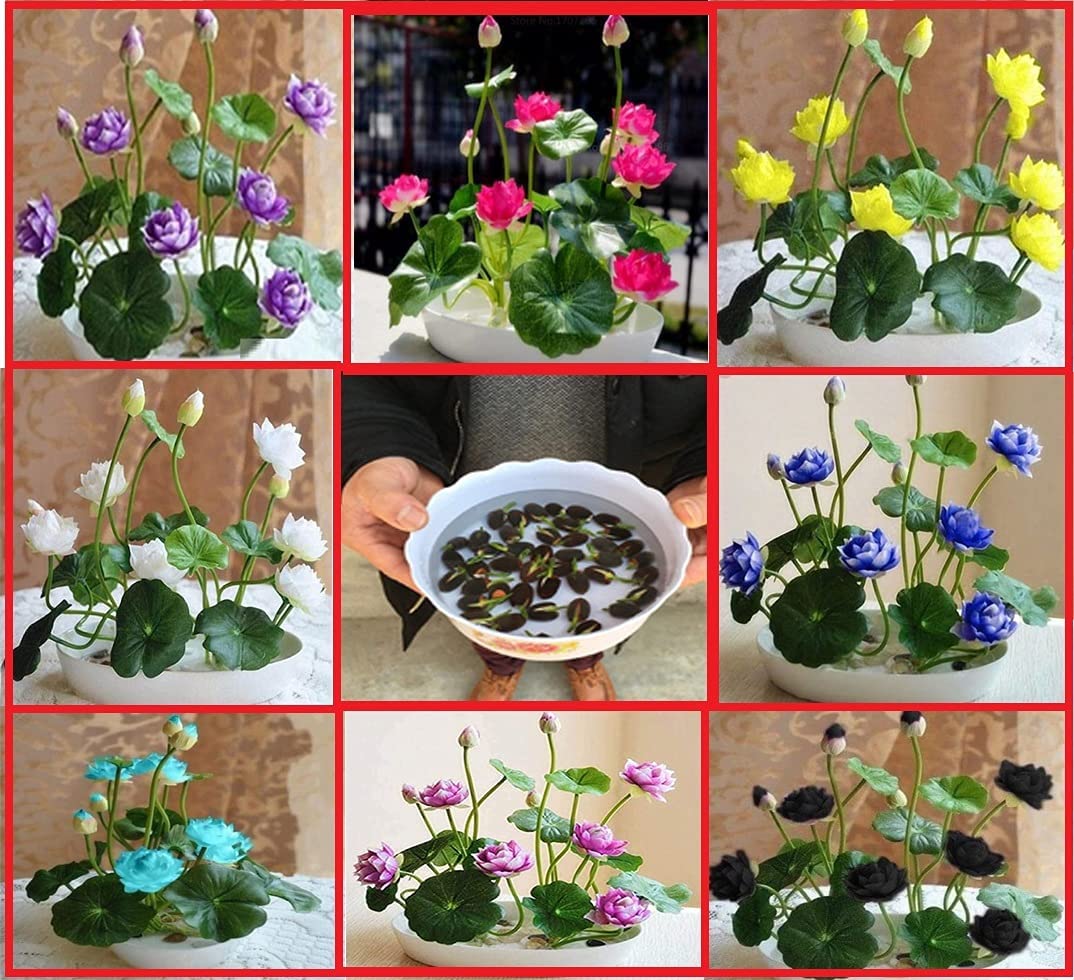
Lotus Mix Flower Seeds (Pack Of 20 Seeds) - All Mix Colors… Growing Lotus Brings Positive Vibrations According To Vaastu Shastra…,Multicolour(lotus545)
Lotus Mix Flower Seeds (Pack Of 20 Seeds) - All Mix Colors… Growing Lotus Brings Positive Vibrations According To Vaastu Shastra…,Multicolour(lotus545)
Couldn't load pickup availability
Sacred to Hindus and Buddhists, the Lotus is the national flower of India. This hardy aquatic plant is native to southern Asia and Australia, but they can be grown in nearly any temperate climate under the right conditions. You can grow lotus from seeds or from tubers. If you grow lotus from seeds, they typically will not flower in their first year. Growing from Seed. 1. Scrape the seed with a file. Using a standard metal file, scrape the hard seed casing to reveal the cream-colored core. Do not file any of the core away or else your lotus will not grow. Filing away the outer casing allows water to reach the core.[2] If you don't have a metal file handy, you can use any sharp knife or even rub the seed against concrete. Just be careful not to scrape away too much of the seed. 2. Place your seeds in warm water. Use a glass or transparent plastic container so that you can see when the seeds start to sprout. Fill the container with dechlorinated water between 75 and 80 °F (24 and 27 °C).[3] After a day of soaking, the seeds will sink to the bottom and swell to nearly twice their original size. Seeds that float are almost always infertile. Remove them or they will cloud up the water. Change the water daily, even after the seeds have started to sprout. When you remove the seedlings to change the water, treat the sprouts with care – they are very delicate. 3. Fill a 3 to 5 US gal (11 to 19 L) container with 6 in (15 cm) of deep soil. This size typically provides enough room for a young lotus to grow. A black plastic bucket will retain heat to better warm the seedlings.[4] Ideally, your soil should be 2 parts clay and 1 part river sand. If you use commercial potting soil to topsoil for houseplants, it will float to the surface once you submerge your tub in water.[5] Make sure the container you choose does not have any drainage holes. The plant may gravitate toward the drainage hole and begin growing outside of it, causing the plant to underperform.
Product Overview
- Brand: Earth Hopper
- Colour: Multicolour
- Special Feature: heirloom
- Sunlight Exposure: Full Sun
- Net Quantity: 20.00 count
- Product Care Instructions: Water
- USDA Hardiness Zone: 3
- Soil Type: Clay Soil
- Moisture Needs: Moderate Watering
- Number of Pieces: 20
Product Features
- Best For House Welness
- Best For Vastu Shastra
Product Information
| Brand | Earth Hopper |
| Colour | Multicolour |
| Special Feature | heirloom |
| Sunlight Exposure | Full Sun |
| Net Quantity | 20.00 count |
| Product Care Instructions | Water |
| USDA Hardiness Zone | 3 |
| Soil Type | Clay Soil |
| Moisture Needs | Moderate Watering |
| Number of Pieces | 20 |
| Country of Origin | India |
| Item model number | 64664 |
| ASIN | B0C4FXKG11 |
| Net Quantity | 20.00 count |
| Best Sellers Rank |
Share